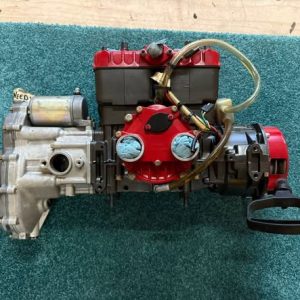
The Rotax 582 “Blue Head” RAVE Engine – Built by Rotax Rick offers aircraft builders, ultralight pilots, experimental-aircraft owners, restorers, and recreational aviation enthusiasts a recognizable two-stroke powerplant for a properly evaluated installation.
Accurate use of Rotax 582 Blue Head, Rotax 582 Blue Head RAVE Engine, and Rotax 582 Aircraft Engine keywords improves visibility without overstating current serviceability.
These related keywords help connect the listing with aircraft builders, sport pilots, engine specialists, and aviation parts buyers.
A Rotax Blue Head Engine, Liquid-Cooled Aircraft Engine, Two-Cylinder Aircraft Engine, and Lightweight Aircraft Engine may provide practical value for aircraft requiring compact power and reduced installed weight.
An Experimental Aircraft Engine, Ultralight Aircraft Engine, Rotax Aviation Engine, and Light Sport Aircraft Engine can support diverse recreational and sport-aviation projects when the exact application is verified.
Understanding the Rotax 582 Blue Head
Every model suffix, serial marking, gearbox designation, modification, and replacement component Rotax Aviation Engine should be recorded because similar Rotax engines may differ internally or externally.
The buyer should determine whether the engine was rebuilt from a complete core, assembled from mixed components, upgraded from another configuration, or built using new and used parts.
Confirming Rotax Rick Build Records
Clear builder documentation strengthens the engine listing and supports future maintenance planning.
Any remaining break-in requirements, operating limitations, fuel recommendations, or follow-up inspections should be disclosed.
Maintaining Power-Valve Operation
The presence of external RAVE housings does not independently prove that the complete system operates correctly.
Replacement parts should match the specific engine configuration rather than being selected through appearance alone.
Fuel and Lubrication Considerations
Two-stroke engines should not be operated using assumptions drawn from automotive or four-stroke aircraft engines.
Professional preparation supports responsible use of the Rotax 582 Aviation Engine.
Understanding the Rotax Cooling System
Cooling performance depends on the radiator, coolant pump, hoses, clamps, fittings, expansion tank, thermostat where installed, coolant condition, and airflow.
Coolant hoses should remain flexible, secure, correctly routed, and protected from heat, abrasion, sharp edges, and moving components.
Inspecting Cylinders, Pistons, and Crankcase
The two-cylinder configuration combines a compact engine layout with coordinated crankshaft, piston, cylinder, induction, exhaust, and ignition operation.
Internal clearances and component measurements should be recorded during a documented build.
Dual Carburetor Fuel Delivery
Both carburetors should open and close together while maintaining appropriate cable security and throttle travel.
Fuel filters, pumps, lines, vents, tanks, and shutoff systems also influence dependable fuel delivery.
Maintaining Reliable Combustion
Complete ignition evaluation supports more dependable operation of the Rotax Aviation Engine.
Replacement ignition parts should match the exact engine configuration.
Matching Engine Speed to Propeller Speed
The exact gearbox model, ratio, serial information, service history, and included components should be confirmed before purchase.
Professional matching protects the Rotax 582 Aircraft Engine and connected propeller system.
Inspecting the Rotax 582 Exhaust
Accurate exhaust information helps determine the true installation cost.
Previous repairs and modifications should be documented.
Using the Rotax 582 in Light Aircraft
Published dry-engine weight should not be confused with complete installed-system weight.
The complete conversion should be reviewed through appropriate engineering and maintenance processes.
Selecting an Engine for a Homebuilt Project
Its suitability depends on airframe design, engine-mount geometry, propeller requirements, cooling airflow, fuel capacity, electrical needs, weight, and operating limitations.
Professional planning supports a more dependable experimental-aircraft project.
Evaluating the Rotax 582 for Sport Aviation
The buyer should review aircraft limitations, maintenance requirements, operating rules, and installation data before purchase.
Operating limitations should reflect the actual aircraft and engine combination.
Understanding Rotax 582 Operating Records
Calendar time and storage conditions can matter even when operating hours are limited.
Missing records do not automatically make the engine unusable, but they increase the need for detailed evaluation.
Understanding Ground-Run Limitations
A controlled engine run can provide useful information about starting, idle quality, throttle response, cooling, ignition operation, fuel delivery, vibration, leakage, and unusual noise.
The engine should not be operated without a suitable propeller, dynamometer, or approved load arrangement when loading is required.
Documenting Internal Condition
Testing conditions and methods should be documented so results can be understood accurately.
Any abnormal resistance, noise, corrosion, play, or contamination should be investigated.
Buying a Blue Head RAVE Engine
The buyer should obtain enough information for a qualified Rotax engine specialist or experienced aviation mechanic to evaluate the powerplant.
- Compare the engine with the receiving aircraft’s mount, weight-and-balance needs, gearbox ratio, propeller requirements, cooling system, exhaust, fuel delivery, controls, electrical system, and cowling.
- Inspect the engine for corrosion, coolant staining, fuel leakage, oil residue, damaged wiring, cracked hoses, loose fittings, impact marks, missing hardware, and unauthorized modification.
- Retain purchase records, build sheets, photographs, serial information, run-test data, maintenance documents, and shipping records with the aircraft project file.
Rotax Engine Packaging Requirements
Open fuel, oil, coolant, intake, and exhaust connections should be protected from contamination using suitable covers.
The crankshaft and gearbox should not carry unsuitable shipping or storage loads.
Integrating Fuel, Cooling, and Electrical Systems
Professional preparation protects both the engine and aircraft.
Fuel lines should remain suitable, supported, filtered, protected, and free from sharp bends or heat damage.
Required aircraft records and operating limitations should be updated appropriately.
Maintaining the Rotax 582 Blue Head Engine
Long-term maintenance includes inspection of spark plugs, carburetors, fuel lines, filters, cooling hoses, coolant, ignition parts, RAVE components, exhaust supports, gearbox, mounts, wiring, and leaks.
Unverified replacement parts and undocumented modifications should be avoided.
Evaluating Rotax Aircraft Engines for Sale
Clean appearance and fresh paint may improve presentation but do not replace mechanical inspection.
Buyers should compare complete engine packages rather than bare powerplants alone.
Buying a Specialist-Built RAVE Engine
The Rotax 582 “Blue Head” RAVE Engine – Built by Rotax Rick offers stronger commercial value when its serial number, internal components, builder records, hours, gearbox, run-test status, and accessories are described accurately.
The strongest purchasing decision begins with confirming the exact engine model, serial number, RAVE configuration, builder documentation, internal parts, crankshaft history, operating hours, gearbox ratio, carburetors, ignition, cooling system, exhaust, test results, and included accessories.
Whether the requirement is a Rotax 582 Blue Head, Rotax 582 Blue Head RAVE Engine, Rotax 582 Aircraft Engine, or Rotax 582 Two-Stroke Engine, exact configuration should guide the purchase.
With complete evaluation and continued care, the Rotax 582 “Blue Head” RAVE Engine – Built by Rotax Rick can deliver a professional combination of lightweight construction, liquid-cooled design, two-stroke power, and recreational aviation versatility.